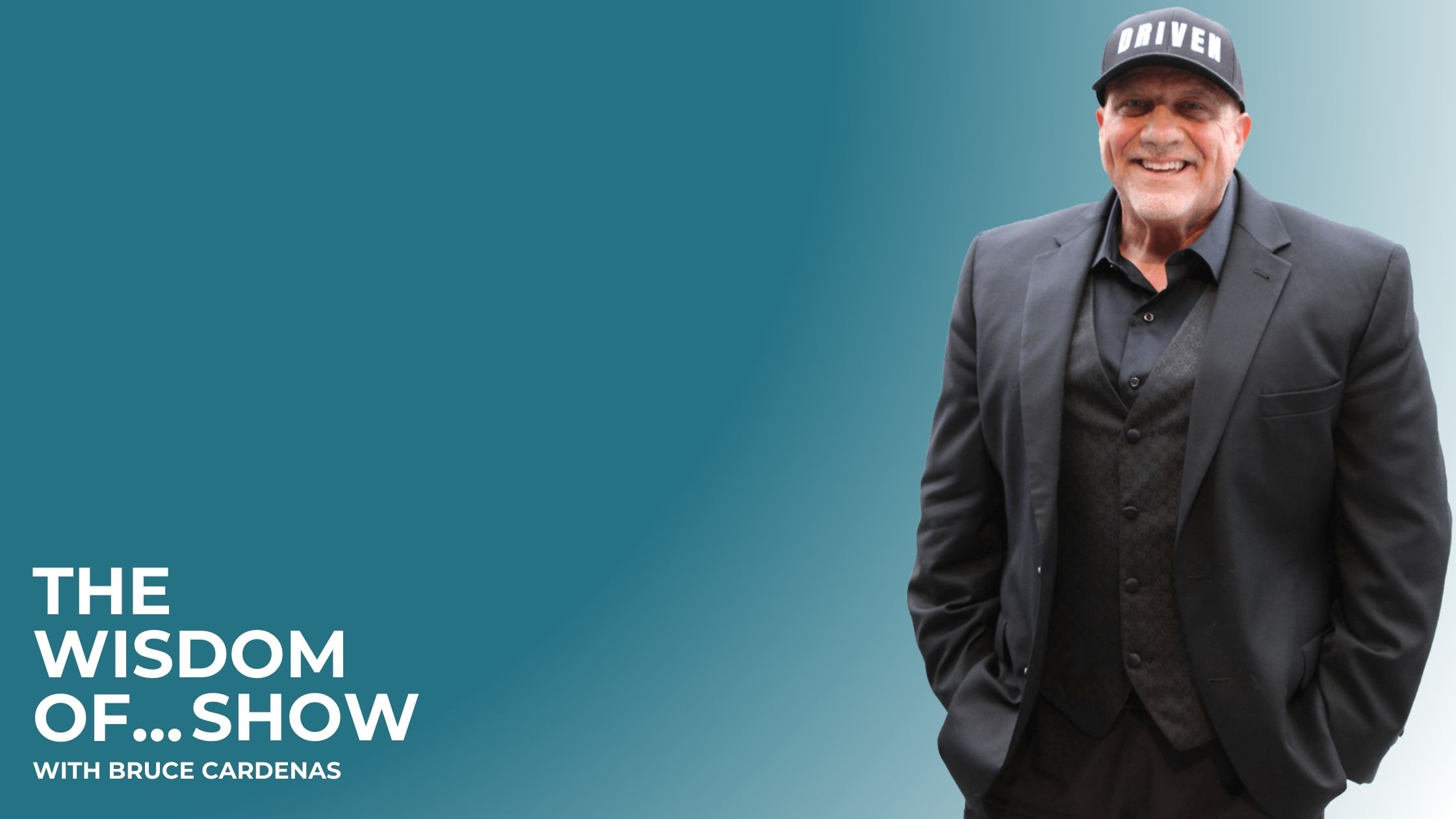
Over the past twelve months, I’ve had the privilege of sitting in conversation with leaders operating at levels few ever reach. As 2025 draws to a close, I find myself returning to particular moments of insight that stood out not for their cleverness but for their depth, clarity, and enduring truth.
These were not casual exchanges or surface-level reflections. They were thoughtful excavations into what leadership truly demands at its highest levels, and certain moments have stayed with me, refusing to fade, precisely because they captured something essential about building, leading, and lasting.
When Leadership Becomes Manipulation With Good Intent
Jeff Dudan said something most leadership gurus would never say out loud:
Leadership is manipulation guided by good intent. I’m going to inspire you to take actions that are good for you, good for the team, good for the company, and good for the wider community.
He named the thing we all know but won’t admit.
Leadership is about getting people to do things they wouldn’t otherwise do. The question is never whether you’re influencing, but whether your influence serves them or just serves you.
Great leaders manipulate reality itself. They create visions big enough for other people’s dreams to fit inside. They paint pictures of futures that don’t exist yet and convince talented people to spend years building toward them.
The difference between manipulation and leadership? Intent.
When your manipulation serves the growth of others, when it serves the mission, when it serves something larger than your own advancement… that’s leadership.
Watch Jeff’s full insight in the compilation episode and learn how to articulate your leadership philosophy with this level of clarity in my Masterclass
The Paradox Every Founder Hits at $10M
Cameron Herold took 1-800-GOT-JUNK from $2 million to $106 million in six years. He learnt that scale is not an extension of vision but a function of building a company.
Vision gets you started. Vision attracts your first customers, your first employees, your first investors.
But vision has a ceiling. Most entrepreneurs hit it hard around $10-30 million.
Here’s why: Vision is about what you’re building. Scale is about how you build it.
Completely different skills. Completely different people.
The entrepreneur who took you from zero to ten million is probably not the person who takes you from ten to a hundred. The skills that got you here become the ceiling that stops you.
Cameron’s insight on delegation reveals the hidden trap:
We delegate the concepts to people, which basically is, here’s the problem, and I want to solve it. The context is why does that problem even matter?
You’ve been thinking about something for six days. Your brain is full of context, history, implications, and second-order effects.
You need to get it out of your head. So you spend ninety seconds downloading it to someone and ask them to run with it.
They can’t.
Think about it like this: You tell your spouse one story about your childhood and expect them to understand your entire life. You were there for five years. They got ninety seconds.
Cameron’s rule: If you spent three weeks recruiting someone, spend three months onboarding them.
Scale breaks at predictable points. Not because of numbers. Because of the systems for transferring context.
Hear Cameron break down this entire framework in the compilation episode . This type of insight, turned into scalable frameworks, is what I teach in my Masterclass
When Fear Becomes Your Greatest Asset
Akshay Nanavati walked across Antarctica solo.
Most people think he conquered fear to do it. The truth is different:
When you engage it, fear propels you to prepare.
He studied from Jack Canfield and Tim Ferriss. He prepared obsessively. Because he was scared of writing a bad book, he wrote a book worthy of being endorsed by the Dalai Lama.
His fear drove him to write a better book.
His philosophy changes everything:
To combat the demonisation of not only fear, but the struggle and suffering of any kind, there are no bad or good emotions. There’s only emotions. And it’s up to us to decide what we do with them.
Most of us spend our lives trying to avoid fear, eliminate stress, and escape anxiety.
Akshay built a framework around engaging them.
His deepest insight:
Acceptance of isness is the key to freedom from all unnecessary suffering.
Not acceptance of what should be. Not acceptance of what could be.
Acceptance of what is.
This isn’t resignation. It’s power.
When you stop resisting reality, you stop creating unnecessary suffering. What remains is just life, unfolding, and you get to choose how to engage with it.
Leadership as Light, Not Spotlight
Tamara Jackson shifted my entire view of authentic leadership:
She reframes a leader’s role not as someone who seeks the spotlight, but as someone who becomes a light for others. Leadership, she explained, is not about resisting the responsibility of being a role model, it’s about embracing it. “I have been blessed with these gifts, skills, and talents,” she said. “I want to use them to make a meaningful difference in the world.”
Focusing on being a light changes everything. It moves the conversation from what is best for me to what is best for us. Many leaders resist this, insisting they just want to be themselves or to be “authentic,” but Tamara shows that often this is humility disguised as avoidance. When people look to you for guidance, you don’t get to opt out of being a role model, you only get to decide what kind of role model you will be.
Watch Tamara’s complete perspective in the compilation and discover how to identify and scale your authentic genius in my Masterclass.
The Species We're Not Talking About
Catriona Wallace rechallenged the assumption that AI is merely a technology or a tool and reframed it as something far more profound: a new species, a new form of intelligence.
By the end of 2024, AI’s overall intelligence had reached an IQ averaging 114, surpassing the average human IQ of 100. This is not a distant threat or a hypothetical scenario; it is a present reality. A species with superior intelligence to humans now exists on this planet, and we are the ones who created it.
Her warning is stark. When we consider AI proliferation, there is a one-in-ten chance that AI could threaten humanity by the end of the century, far higher than the existential risks posed by climate change or nuclear war, each of which is closer to one in a thousand. Yet the real danger isn’t the technology itself, it’s what we are delegating to engineers who may not understand business, while boards that don’t understand technology abdicate critical decisions.
But within this challenge lies an extraordinary opportunity. Catriona calls for leaders who can integrate human intelligence, artificial intelligence, natural intelligence, and even cosmic intelligence to co-create a flourishing future. The question is no longer what AI will do, but how we, as conscious leaders, choose to shape it.
Catriona’s insight in the compilation episode is essential viewing for every leader navigating 2026.
The Emotional Intelligence Gap That Kills Careers
Mike Desjardins works with senior executives who are struggling.
Every single time he gets called in to assess why a director, VP, or executive vice president isn’t collaborating well, it’s the same diagnosis:
Emotional intelligence. Every time.
The reason they got away with it, they’re very strong as a subject matter expert, and they’re very smart. And so they’ve been promoted all the way up until they have to collaborate with a very smart group of people who are highly emotionally intelligent, and they won’t put up with their crap.
You can be brilliant and ascend on IQ alone. Until you can’t.
At senior levels, everyone is smart. What separates those who succeed from those who plateau is EQ.
His framework:
Self-awareness: I understand where my emotions are in this conversation
Empathy: I’m curious about where you’re at and what matters to you
Social skills: I can adapt my approach as appropriate for the situation
Self-regulation: I can stop myself from saying what I probably shouldn’t
Motivation: I’m self-motivated, living in mastery, autonomy, and purpose
If you don’t develop this early, you’re trying to retrofit it into a forty-something executive with an ego built over decades of success.
Mike’s observation: You need their ego to have a slight fracture in it. A little light needs to get through so that they can understand this is the thing holding them back.
Business as a Force for Good, Always
Nick Halaris completely flipped the conversation about what it means to build a purpose-driven business. He challenges the idea that business can only be a force for good after profits are made and donations are given. Instead, he reframes business as an opportunity to create positive impact every day, through the intention you bring to your work and the way you engage with others.
“A business is, by definition, serving the community,” he explains. “It provides a product or service that people voluntarily choose to engage with, exchanging their hard-earned money. Every transaction is an opportunity to be a force for good, not someday, after you’ve made your fortune, but today, in every interaction.”
Nick observes that Western culture often trains us toward selfishness: “It’s about getting yours, sometimes regardless of the consequences.” Yet every philosophy, religion, and mystic tradition points in the opposite direction: a good life is one focused on the welfare of others and the broader community.
When Wisdom Begins as Rebellion
Jim Garrison delivered perhaps the most provocative insight of the year: wisdom begins as an act of rebellion. Drawing on Plato’s allegory of the cave, he reminded us that we are all shackled in some way, watching shadows on the wall and mistaking them for reality. Then something shifts. We look down, we see the shackles, and we realise they are often constraints we impose on ourselves.
When we attempt to return and share this new understanding with others, “Hey, reality is out there, beyond the cave”, we often encounter resistance, even hostility, because people are attached to their familiar delusions.
For Jim, wisdom is not about having the answers; it is a disposition of deep inquiry. It resides in the questions we ask, not in the certainties we cling to. Wisdom is the relentless pursuit of truth, the courage to question authority, to challenge conventions, and to probe deeper into what we think we know.
And the most powerful form of influence, Jim emphasises, is not through argument, debate, or persuasion, but through living your truth authentically. By embodying your principles and convictions so fully, you transform the quality of dialogue around you and inspire change in others without force or coercion.
As we move from 2025 into 2030, he warns, we are entering one of the most consequential periods in human history. Old structures are collapsing, and new possibilities are emerging. How humanity chooses its priorities will determine our collective fate.
Watch Jim’s full insights in the compilation , and explore how to cultivate your own wisdom in my Masterclass.
The Secret Hiding in Plain Sight
Isaac Balbin revealed a surprising truth about why most organisations struggle to innovate: the very lack of understanding about how systems are designed often allows them to drift down paths they shouldn’t be on.
He illustrated this with the story of Garry Kasparov and Deep Blue. When Deep Blue defeated Kasparov at chess, Kasparov didn’t stop playing. Instead, he began competing with computer assistance, taking on other grandmasters who were doing the same.
Then came a groundbreaking tournament open to anyone with any computer. Who emerged victorious? Not a grandmaster, and not someone with a supercomputer. But a 25-year-old in Alabama with five Pentiums. The secret wasn’t superior chess training, and it wasn’t the most powerful machine. It was the ability to leverage technology to amplify human capability.
Isaac’s insight is clear: the future isn’t humans versus machines. It’s humans plus machines versus humans without machines. Organisations that understand and embrace this principle will be the ones that thrive.
Watch Isaac’s full insights in the compilation , and discover how to harness technology to innovate at your highest level in my Masterclass.
The Journey From Millions to Billions
Radek Sali built Swisse Wellness from a small vitamin company into a billion-dollar global brand. His insights on scaling with intention reveal what separates companies that grow sustainably from those that collapse under their own expansion.
The wisdom he shared goes beyond tactics. It’s about maintaining the core of what makes a company special while building the infrastructure to scale it globally.
His perspective on balancing growth with purpose, on protecting company culture through rapid expansion, and on making decisions that serve long-term value rather than short-term gains offers a masterclass in intentional scaling.
What This Means for Your 2026
The patterns emerging from these conversations point to a powerful truth for the year ahead: strategy is essential, but it’s not enough. The leaders who will define 2026 will be those who combine sharp strategy with deep wisdom, courage, and purpose.
Context transfers slower than concept. Scaling effectively means investing in the why, not just the what.
Fear, when engaged intentionally, fuels preparation. Discomfort is a signal, not a setback. Learn to transmute it into growth.
Emotional intelligence sets your ceiling. IQ opens doors, but EQ determines whether you stay, lead, and thrive.
Business can be a force for good at all times, not just eventually. Every interaction is an opportunity to choose the impact you want to make.
AI is a new species, not a tool. The future belongs to those who can collaborate with it, not compete against it.
Leadership is influence with intent. The question isn’t whether you will influence—it’s whether your influence serves growth, for yourself, your team, and the wider world.
Wisdom begins as rebellion. Question assumptions, live in the questions, and let your insights shape action.
In 2026, strategy will guide the plan, but wisdom will determine the outcome. The leaders who thrive will be the ones who apply strategy through the lens of insight, courage, and purpose, leading beyond immediate results toward lasting impact.
Watch the The Wisdom Of… 2025: Defining Moments & Transformative Wisdom episode here.
Learn how to systematically extract and scale wisdom in my Masterclass.
The year ahead is brimming with opportunity.
For those ready to lead with clarity, courage, and wisdom, 2026 will be extraordinary.